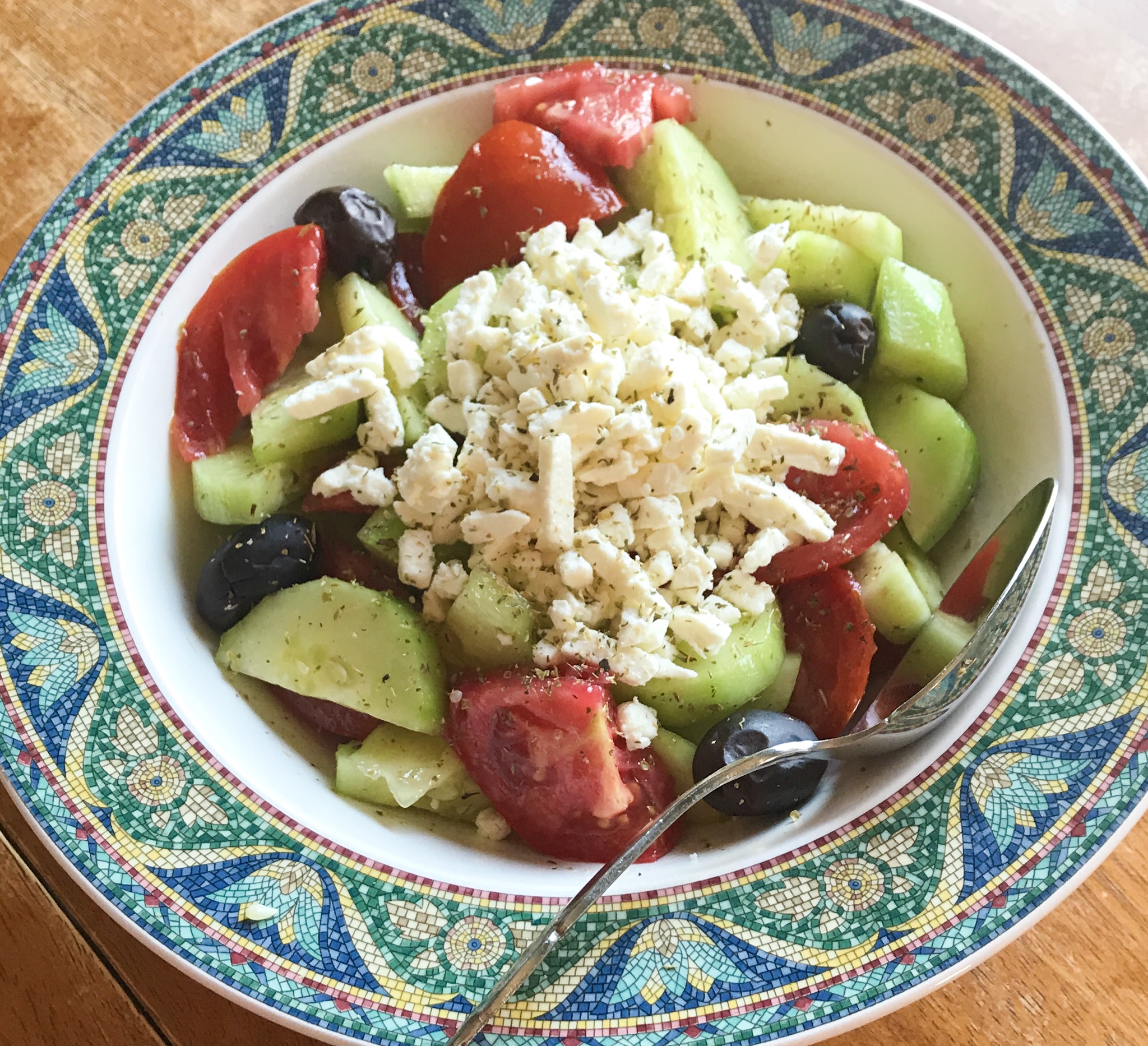
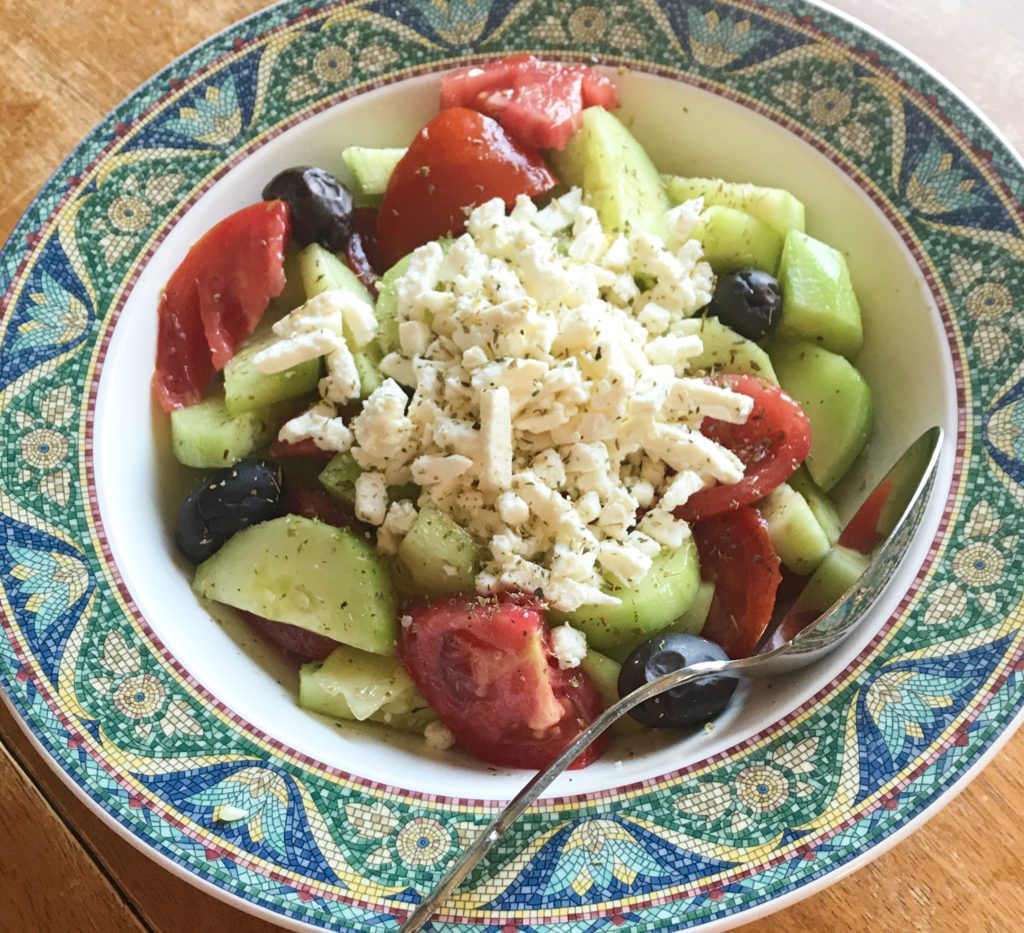
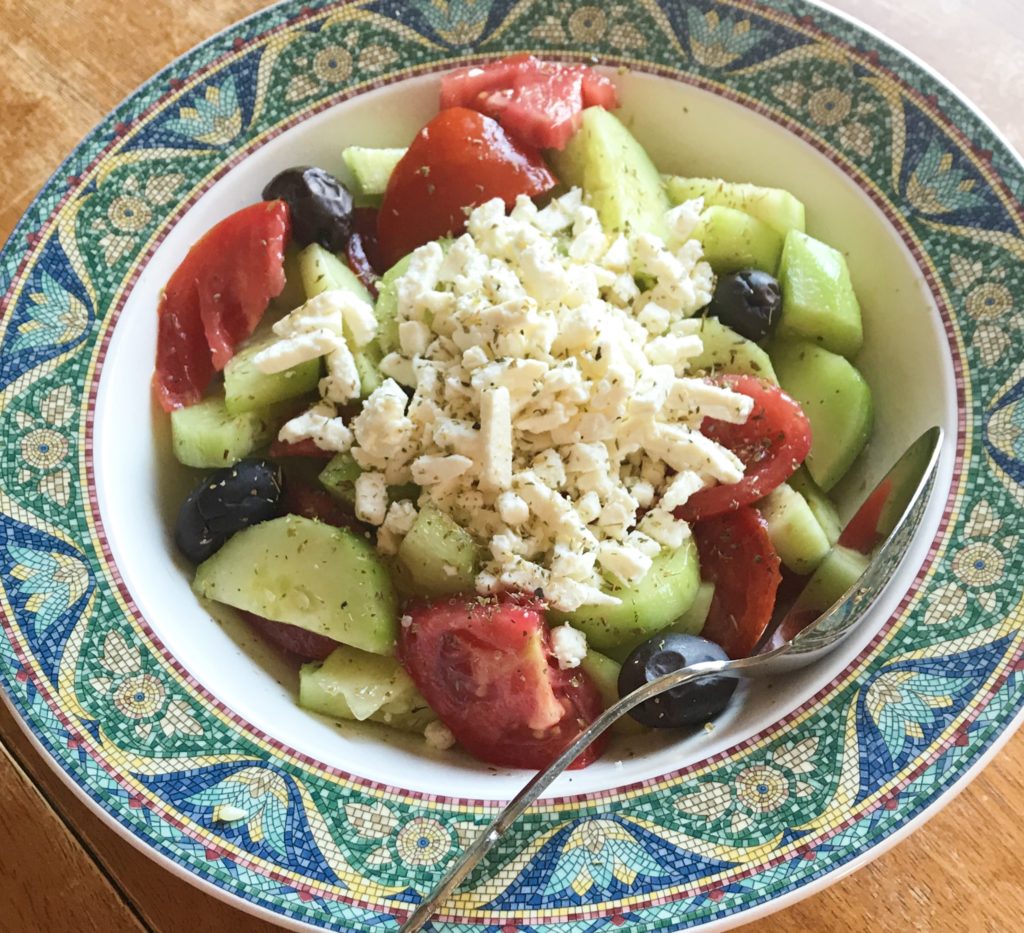
If you’re looking for an authentic Greek salad recipe, you’ve come to the right place. Known in Greece as Horiatiki (Χωριάτικη Σαλάτα), or Greek Village Salad, this classic Mediterranean salad is made with ripe tomatoes, crisp cucumbers, red onion, Kalamata olives, creamy feta cheese, and a simple dressing of extra virgin olive oil, red wine vinegar, and oregano.
Unlike many restaurant versions served in the United States, a traditional Greek salad contains no lettuce. Instead, it celebrates the freshness of simple, seasonal ingredients that need very little to become something extraordinary.
Growing up in our Greek family, Horiatiki wasn’t just a side dish—it was part of nearly every summer meal. Whenever tomatoes and cucumbers were ripe, a large bowl of Greek salad appeared on our table alongside roast chicken, grilled meats, fresh bread, and feta cheese. It’s one of those recipes that reminds me that the simplest foods are often the most memorable.
Whether you’re making Greek salad for the first time or searching for the authentic version you enjoyed while visiting Greece, this family recipe will show you exactly how we make it at home.
Why You’ll Love This Authentic Greek Salad
- Authentic Greek family recipe
- Made with fresh Mediterranean ingredients
- Ready in just 15 minutes
- Naturally gluten-free
- Mediterranean diet friendly
- No complicated dressing
- Perfect for summer entertaining
- Delicious alongside grilled meats, seafood, or roasted chicken
What Is Horiatiki?
Horiatiki, pronounced ho-ree-AH-tee-kee, translates to Village Salad.
It is Greece’s traditional everyday salad, found everywhere from family kitchens to seaside tavernas. Unlike many American-style Greek salads, authentic Horiatiki contains no lettuce. Instead, it features large pieces of ripe tomatoes, cucumbers, onions, olives, and feta dressed simply with olive oil, vinegar, oregano, and sometimes a squeeze of lemon.
Because there are so few ingredients, quality matters. Fresh vegetables, good olive oil, and authentic Greek feta make all the difference.
Why Authentic Greek Salad Doesn’t Have Lettuce
One of the biggest misconceptions about Greek salad is that it should include lettuce.It shouldn’t.
Traditional Horiatiki is built around tomatoes and cucumbers, not leafy greens. The vegetables release their juices after being dressed with olive oil and vinegar, creating a light, flavorful dressing that is perfect for dipping fresh bread.
Many American restaurants add lettuce because it stretches the salad and creates more volume, but in Greece, you’ll almost never see it.
A Taste of Summer in Our Greek Family
Summer always meant fresh vegetables. We only made Greek salad when tomatoes and cucumbers were at their peak. My husband and I still follow that tradition today. If the tomatoes aren’t ripe and flavorful, we simply wait. Some recipes can be made year-round, but authentic Greek salad truly shines when the vegetables are in season.
One of my favorite summer memories is bringing home our weekly CSA basket filled with tomatoes, cucumbers, peppers, and herbs. Those fresh vegetables inspired many family dinners, usually centered around a simple Greek meal.
A pan of Greek Lemon Garlic Roast Chicken and Potatoes would be roasting in the oven while I assembled a large bowl of Horiatiki. We’d gather around the table with crusty bread, feta, olives, and whatever vegetables were freshest that week.
Those dinners became more than meals. They were opportunities to share stories about our family’s roots on the beautiful island of Karpathos, teaching our children about their heritage while enjoying the foods our family has loved for generations.

Ingredients You’ll Need
Tomatoes
Choose ripe, in-season tomatoes whenever possible. Garden tomatoes or locally grown tomatoes provide the sweetest flavor and are the foundation of an authentic Greek salad.
Cucumbers
English cucumbers, Persian cucumbers, or fresh garden cucumbers all work well. Peel them if the skin is thick or bitter.
Red Onion
Thinly sliced red onion adds just enough sharpness without overpowering the vegetables.
Kalamata Olives
Traditional Greek salads are made with Kalamata olives, which provide their signature rich, briny flavor.
Feta Cheese
Whenever possible, use a block of authentic Greek feta packed in brine rather than pre-crumbled feta. The texture and flavor are far superior.
Green Bell Pepper (Optional)
Many Greek families include sliced green pepper, while others omit it. Either version is authentic.
Dried Greek Oregano
A sprinkle of dried Greek oregano adds the unmistakable Mediterranean flavor that makes this salad so special.
Homemade Greek Salad Dressing
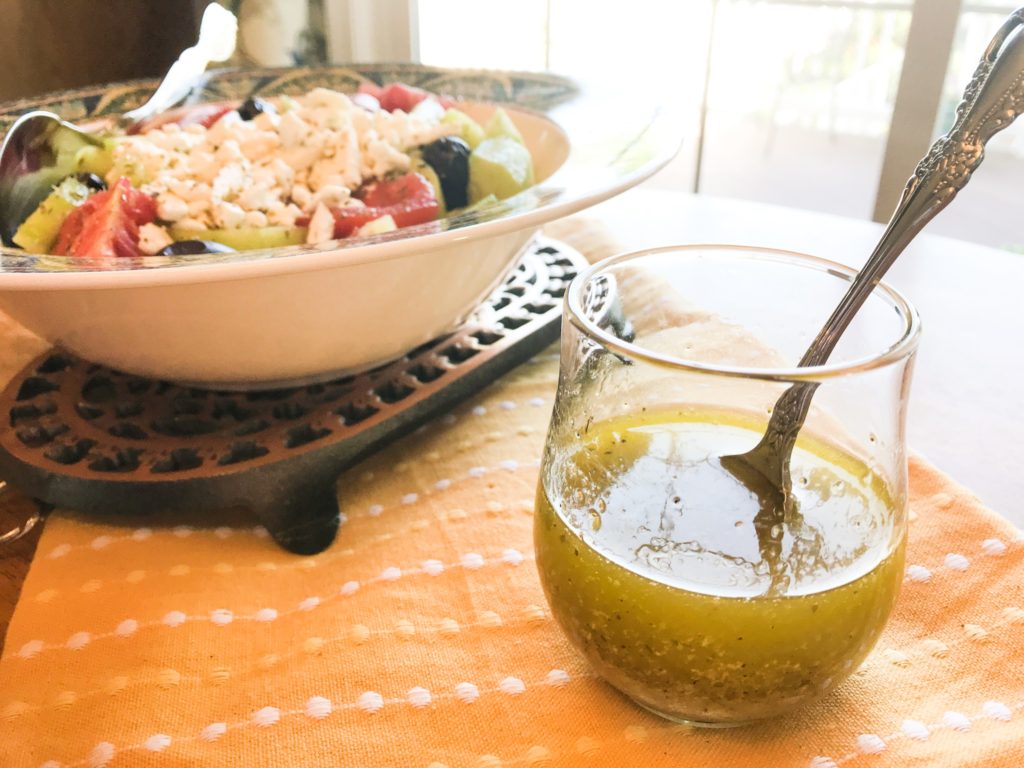
I recommend using my homemade Greek Salad Dressing for the freshest flavor. It’s made with extra virgin olive oil, red wine vinegar, lemon juice, oregano, garlic, salt, and pepper, and it comes together in just a few minutes.
Homemade Greek Salad Dressing
The dressing is one of the reasons authentic Greek salad tastes so fresh. Unlike many bottled dressings, traditional Greek salad dressing uses just a handful of simple Mediterranean ingredients that allow the vegetables to shine.
For this recipe, I use my homemade Greek Salad Dressing, made with extra virgin olive oil, red wine vinegar, fresh lemon juice, oregano, garlic, salt, and pepper. It takes only a few minutes to prepare and can be made several days in advance.
I recommend using about ¼ cup of dressing for this salad, then adding more to taste after the vegetables have had a chance to marinate for 10–15 minutes.
How to Make Authentic Greek Salad
Step 1: Prepare the Vegetables
Wash and dry all of the vegetables thoroughly.
Cut the tomatoes into large wedges rather than small pieces. Slice the cucumbers into thick rounds and thinly slice the red onion.
If using green pepper, slice it into thin strips.
Place everything into a large serving bowl.
Step 2: Add the Olives and Feta
Scatter the Kalamata olives over the vegetables.
Place the feta on top either as one large slab, just as you’ll often see in Greece, or cut it into generous chunks.
Step 3: Dress the Salad
Whisk together the olive oil, vinegar, lemon juice, oregano, salt, and pepper.
Drizzle the dressing evenly over the salad.
Step 4: Let the Flavors Develop
Allow the salad to rest for 10–15 minutes before serving.
This gives the tomatoes time to release their juices, creating the flavorful dressing that makes authentic Greek salad so irresistible.
Serve with crusty bread to soak up every last drop.
Vayia’s Tips
- Use ripe summer tomatoes whenever possible.
- Never refrigerate tomatoes before making the salad.
- Choose block feta packed in brine for the best flavor.
- Use high-quality extra virgin olive oil.
- Dress the salad just before serving.
- Let it rest for 10–15 minutes before eating.
Common Mistakes
Using Lettuce
Traditional Horiatiki does not include lettuce.
Using Cold Tomatoes
Cold tomatoes lose much of their natural sweetness and flavor.
Buying Pre-Crumbled Feta
Block feta has a creamier texture and richer taste.
Overdressing the Salad
A little dressing goes a long way. The vegetables will naturally release their juices.
Cutting the Vegetables Too Small
Large pieces are traditional and help the vegetables stay crisp.
Variations
- Include sliced green peppers.
- Use cherry tomatoes when large tomatoes aren’t in season.
- Top with a whole slice of feta instead of crumbles.
- Add fresh oregano if available.
What to Serve with Greek Salad
This refreshing salad pairs beautifully with many traditional Greek dishes, including:
- Greek Lemon Garlic Roast Chicken
- Greek Lemon Potatoes
- Yiayia’s Pastitsio
- Youvarlakia Avgolemono
- Karpathian Beef Stew
- Tourlou Tourlou
- Greek Pork and Celery Stew
- Dolmades
For even more family favorites, browse my Traditional Greek Recipes collection.
Storage
Greek salad is best enjoyed fresh. If you have leftovers, refrigerate them in an airtight container for up to two days. Because tomatoes naturally release juice, the salad will become softer over time but will still be delicious.
Frequently Asked Questions
Does authentic Greek salad have lettuce?
No. Traditional Horiatiki contains tomatoes, cucumbers, onions, olives, feta, olive oil, vinegar, and oregano—never lettuce.
What does Horiatiki mean?
Horiatiki translates to “Village Salad” and refers to Greece’s traditional country-style salad.
What kind of feta should I use?
Authentic Greek feta packed in brine provides the best flavor and texture.
Can I make Greek salad ahead of time?
Yes. Prepare the vegetables ahead of time and add the dressing just before serving.
Should tomatoes be refrigerated?
No. Tomatoes have the best flavor when stored at room temperature.
Can I use bottled Greek salad dressing?
You can, but I recommend making your own whenever possible. Homemade Greek salad dressing is fresher, takes only a few minutes to prepare, and lets you control the quality of the ingredients. I almost always use my Homemade Greek Salad Dressing recipe because it’s made with simple pantry staples and complements this salad perfectly.
What olives are used in authentic Greek salad?
Kalamata olives are the traditional choice.
Can I add grilled chicken?
Yes. While not traditional, grilled chicken turns this salad into a satisfying meal.
Is Greek salad healthy?
Yes. It’s naturally rich in vegetables, healthy fats, and Mediterranean ingredients.
Can I use cherry tomatoes?
Absolutely. They’re an excellent option when large tomatoes aren’t at their peak.
Final Thoughts
Authentic Greek salad is a perfect example of how a few fresh, high-quality ingredients can create something truly unforgettable. Every summer, this simple Horiatiki reminds me of family dinners, garden-fresh vegetables, and the traditions that connect us to our Greek heritage.
Whether you’re serving it alongside grilled chicken, roast lamb, seafood, or simply enjoying it with warm crusty bread, this classic Greek salad brings the fresh flavors of the Mediterranean to your table with every bite.
If you make this recipe, I’d love to hear how it turned out. Leave a comment below, rate the recipe, and save it on Pinterest so you can enjoy this authentic Greek family favorite all summer long.






1 thought on “Authentic Greek Salad Recipe (Horiatiki)”